Archives de l’auteur : Houmaidimustapha

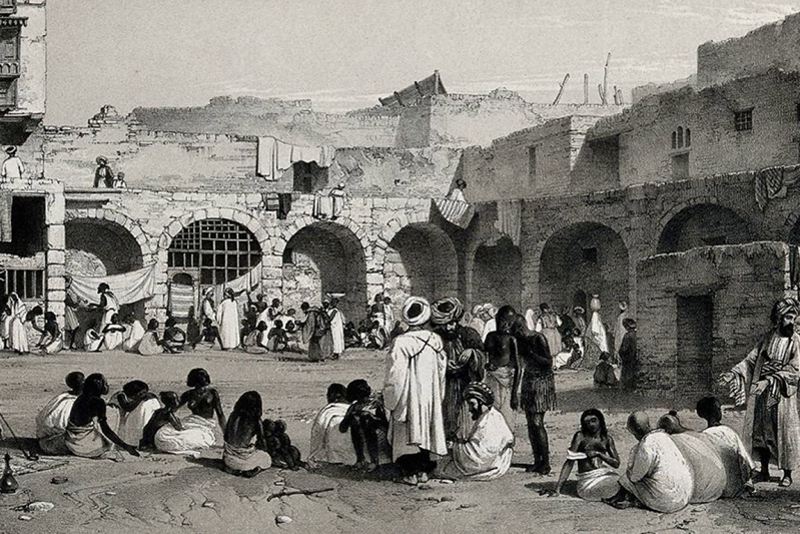
Slavry in Morocco
Slavery in 1500 Morocco.
Slavry in 1500 in morocco
Slavery was present in Morocco in the 1500s, as it was in many other parts of the world at that time. Morocco was a hub of international trade, and slavery was an important part of the economy, particularly in the sale of slaves to European powers.
Many of the slaves in Morocco at that time were either captured in raids or traded from other parts of Africa, while others were the result of debt bondage or criminal punishment. Slavery was also part of the social structure, with some individuals being born into slavery or becoming enslaved as a result of inheritance laws.
The use of slaves in Morocco during this time period was not limited to labor, but also extended to military and administrative positions. Some slaves rose to positions of great power and influence, including Ahmed al-Mansur, who was a slave in the court of the Saadian dynasty before rising to become the sultan of Morocco in the late 1500s.
However, it’s worth noting that the practice of slavery was not universally accepted in Moroccan society at the time. Some scholars and religious leaders spoke out against the practice, and there were occasional uprisings by enslaved individuals seeking freedom. Ultimately, the abolition of slavery in Morocco did not occur until the 20th century.

In the Arab world, appeals such as those made by the Palestinian actress Maryam Abu Khaled spark discussion about the racism suffered by the black population of the region, and about the still-living legacy of centuries of the Arab-barbaric slave trade.
If Frantz Fanon wrote little on this subject, his analysis of racism from the point of view of its victims allows us to think about a phenomenon that has long been a taboo in the Maghreb. During his life, Fanon came into direct and violent contact with racism. He expressed this reality in particular by recounting his experiences, whether in Martinique or in the ranks of the “Allied” army during World War II, or in the streets of Paris and Lyon, as well as in the streets of occupied Algeria. Through the lived experience of race, which is a distinctive way of understanding racism, Fanon provides invaluable tools for attempting to understand the psychological and cultural causes of (racial) alienation, an understanding of the facts that he sees as a precondition for its « liquidation ».
- Sans titre
- Slavry in MoroccoSlavery in 1500 Morocco. Slavry in 1500 in morocco Slavery was present in Morocco in the 1500s, as it was in many other parts of the world at that time. Morocco was a hub of international trade, and slavery was an important part of the economy, particularly in the sale of slaves to European powers.Poursuivre la lecture de « Slavry in Morocco »
 Titre du site
Vous devez être connecté pour poster un commentaire.